
5 Women to Watch in Venture - Fall 2025
In this Fall's edition of Women to Watch in Venture, I'm thrilled to showcase five women in venture who are making significant strides in the industry and beyond. Their successes and visions inspire me deeply as they reshape venture capital with their innovative investment strategies, passion, and dedication to impact.
These remarkable women come from varied backgrounds, enriching their funds and the industry with unique insights. Unified by their drive to challenge the norm, creative approach to problem-solving, and unwavering support for founders and colleagues, they truly stand out.
Let's celebrate their inspiring accomplishments and ambitious goals this season.
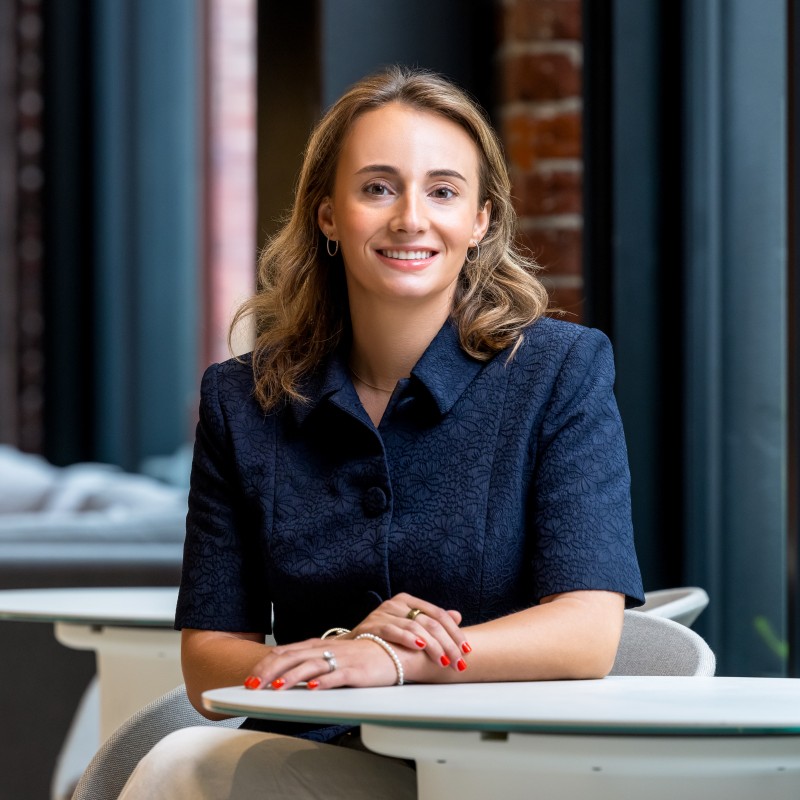
Nicole (LoRusso) Falasco
Nicole Falasco leads industry partnerships at Bain Capital Ventures, one of venture's most storied names. In a role she essentially built from scratch, Nicole has transformed how the firm connects its 250+ portfolio companies with the enterprise buyers and trusted advisors who can accelerate their growth.
Nicole's path to venture was, in her words, "kind of accidental." She began her career in a postgraduate sales development program at Thomson Reuters, rotating through every function in a sales organization—from cold calling to customer success to solution selling. This foundation led her through roles at Yext during COVID, where she helped financial institutions and health systems manage critical public information, and later to Airtable, where she worked with enterprises on process transformation.
When Bain Capital Ventures reached out, she recognized an opportunity to build something entirely new. At BCV, she discovered there was no systematic way to leverage the firm's collective relationships. What existed was purely transactional—tap someone for a favor, and that was it.
"I took it upon myself to build out our network and then really leverage that with our portfolio and our partners. It's a lot of matchmaking between what executives care about, what their pain points are, and what technology they're using."
Nicole now manages multiple executive advisory boards—CISO, CRO, CFO, CTO, and commerce leaders as well as partnerships with leading banks and technology companies—that serve as the connective tissue between BCV's portfolio and its ideal customers. But these relationships go far beyond sales introductions. She helps portfolio companies think through everything from hiring their first finance employee to understanding what a finance team should look like at a billion-dollar company to understanding how enterprise teams evaluate vendors, often well before founders would otherwise encounter these challenges.
Her vision for impact centers on making BCV's network a genuine differentiator—not just for winning deals, but for the ongoing support founders receive after investment. She's building toward flagship events that bring together C-suite executives across functions to explore how enterprise technology adoption is evolving.
Nicole's Hot Take: Show up even when you feel like an imposter. Authenticity beats perfection every time. Just being in the room is half the battle—most people don't even take that step.
Nicole's Trend to Watch: 2026 will mark the beginning of measurable AI productivity. After two years of experimentation, boards and public investors will demand clear metrics on financial impact, cost reduction, and productivity gains. Companies that can easily demonstrate ROI will emerge as clear winners.
Nicole's Career Advice: Don't be shy to reach out to someone who has the job you're looking for, even if you don't see one posted. Platform jobs in venture aren't really posted publicly—it's through those conversations and staying top of mind that opportunities happen. People in this industry genuinely want to help.

Sydney Paige Thomas
Sydney Paige Thomas is Founding General Partner at Symphonic Capital, a women-led fund investing in the crucial gap between pre-seed and seed. Alongside her co-GP Shruti Shah, Sydney has carved out a distinctive lane in an increasingly crowded pre-seed landscape.
Sydney's journey to venture began in public policy at Duke, where she originally wanted to study cultural anthropology—a direction her parents quickly redirected toward something more "practical." But public policy proved to be the perfect blend: studying human behavior while trying to shape it. She went on to work in the Bloomberg administration in New York City - exposure to the private sector sparked a new curiosity.
After Berkeley business school, where she spent most of her time outside the classroom exploring opportunities in the private sector, she cold-emailed hundreds of people to break into venture—eventually landing at Precursor Ventures, where she spent seven years honing her craft.
"I cold emailed hundreds of people. I didn't have an in, didn't have a connection. One of the folks who I cold emailed finally responded back and got really engaged with my vision."
Symphonic Capital focuses on a specific inflection point: companies that have raised an initial pre-seed round and gone through an accelerator, but aren't yet showing the clear traction that larger seed funds now require. These founders need a new lead and fresh capital—and Symphonic steps in with both capital and a scaffolded approach to company-building.
Sydney's public policy background shapes how she evaluates companies. She thinks in systems—asking what the second, third, and fourth-order impacts of an investment might be. Combined with Shruti's operational expertise, this creates a framework that naturally filters for the right partnerships. Their concentrated portfolio of around 30 companies means they need to deeply believe their work with each founder will help them outperform.
Sydney's Hot Take: A friend of mine has started eating salad for breakfast, and I think it's brilliant. It's like working out first thing in the morning—you're already winning.
Sydney's Trend to Watch: The evergreen fund structure is fascinating. It creates real accountability because you only eat when you return capital. Firms like Acumen America are proving this model works, and I wish more of the industry would adopt similar approaches.
Sydney's Career Advice: Come in with a really clear understanding of what success looks like for you—not for anyone else. Have a checklist of what you need to learn, because without it, you'll keep adding to the list indefinitely. Stay focused on your vision.
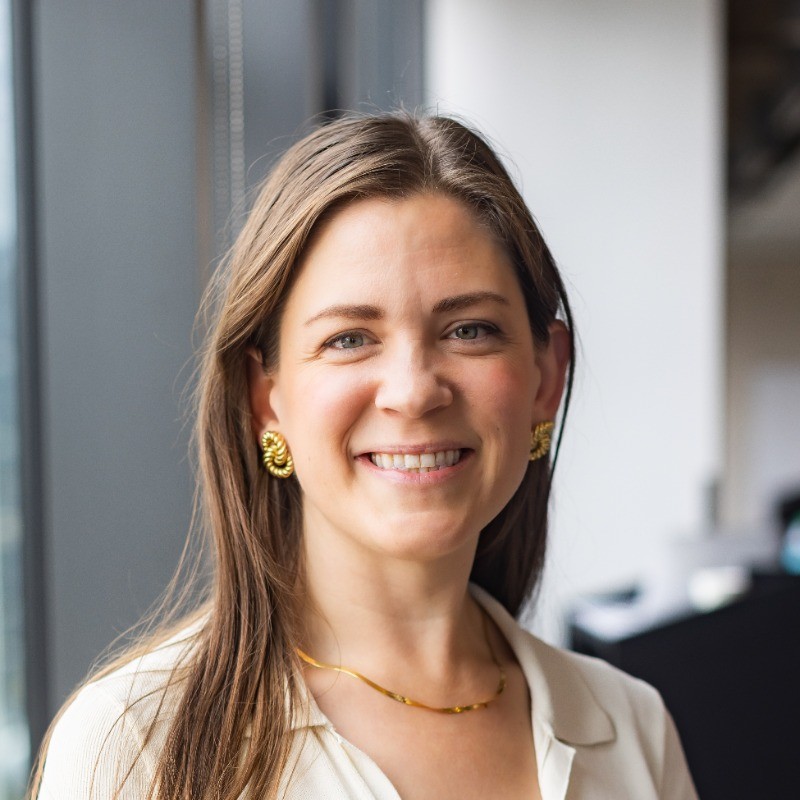
Amber Illig
Amber Illig is General Partner at The Council, an early-stage firm backing First Builders — folks who helped previous companies scale up — building for essential industries like healthcare, law, and manufacturing.
Amber was raised by an entrepreneur father but was encouraged to take the safer route. She studied engineering, landed at Eli Lilly, then Apple—where a transfer to the Bay Area opened her eyes to the startup world. "I had never really even heard of venture capital before that moment. Silicon Valley wasn't even on my radar before I got that job."
Rather than leap immediately, she moved methodically: Snap pre-IPO (helping launch their first hardware product), then Cruise as it scaled from 400 to 2,500 employees. Along the way, she began angel investing, writing 30+ small checks over three years without a specific thesis—just to see what she gravitated toward.
"When I looked back at that portfolio, it was doing very well—6.8x markup. I was able to invest ahead of Y Combinator, Lightspeed, Lux Capital, Union Square Ventures - in most cases at better terms. It told me something is going right here."
That track record, combined with a community of female operators she'd organized, gave her the confidence to launch The Council's first fund in late 2021. The firm focuses on software for essential industries—manufacturing, supply chain, healthcare, education, agriculture—sectors that often get overlooked but represent massive markets with unsolved problems.
Amber hopes to show that investing in these high-impact areas, with a portfolio that truly reflects America's diversity (50% female CEOs, over 40% non-white CEOs in Fund I), can generate returns equal to or exceeding consumer tech. Her portfolio company GCAI, in legal AI, recently raised a Series B at a $555 million valuation—proof that the thesis is working.
Amber's Hot Take (Professional): A lot of early-stage investors don't actually have the risk appetite for early-stage investing. They invest pre-revenue, then panic-call co-investors two months later because they haven't seen results. If you can't stomach the uncertainty, you should be investing one round later.
Amber's Hot Take (Personal): Forks and spoons should face UP in the dishwasher. They get washed better because they're less likely to stack against each other.
Amber's Career Advice: Don't hang out exclusively in circles that are just for women and minorities out of comfort. Some of the greatest doors opened to me came from observing how male GPs introduce themselves to LPs and absorbing that confidence. Have your support networks, but don't do it at the expense of learning from everyone around you.
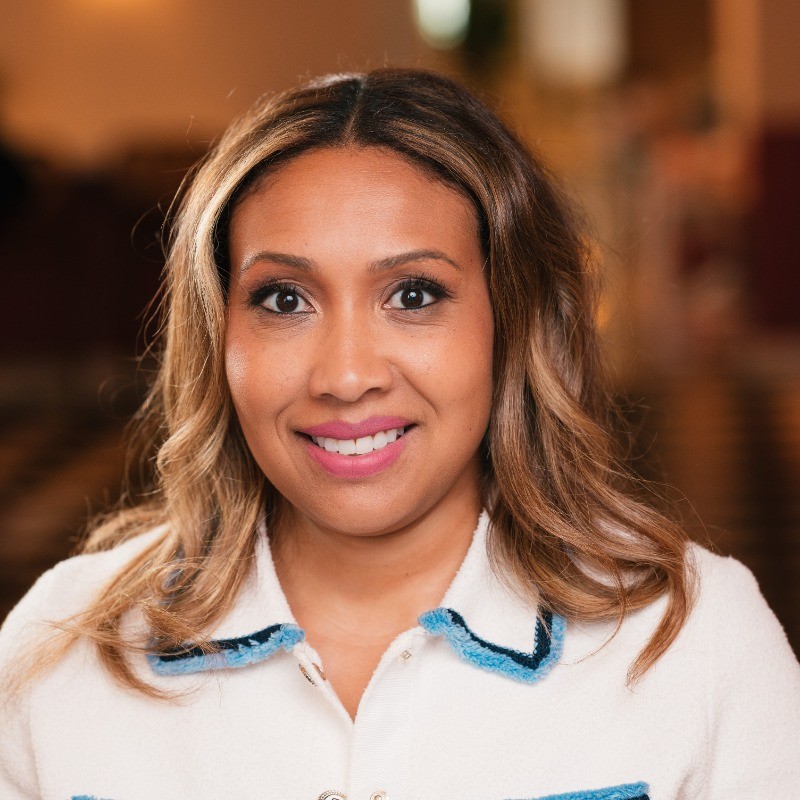
Yasmin Ferrine
Yasmin Ferrine is General Partner at Visible Hands, a Boston-based pre-seed firm backing underrepresented founders—defined by race, gender, or geography (founders outside established startup ecosystems). Since launching in 2020, the firm has invested in over 100 companies and built a national reputation.
Yasmin's path to venture wound through traditional finance—small cap value investing, impact investing and ESG work, then an asset manager serving family offices, endowments and foundations. That last role gave her visibility into LP portfolios where venture played a role, and exposure to the fundraising process for venture products. Looking back, she'd always been interested in management teams and the strategic side of building businesses.
What makes Visible Hands distinctive isn't just its thesis—it's the business model. The three co-founding GPs built a separate operating entity that runs ecosystem programs funded by JP Morgan, tech companies, government agencies like NYCEDC, and foundations. This gives them the resources of a much larger fund while remaining small and nimble on the investing side.
"Part of what is hard for emerging managers is the economics are broken—you're trying to do everything without a lot of resources. Our team has brought in outside capital to be an ecosystem builder from day zero."
Yasmin's family office experience informs how she thinks about fund strategy. She's focused on practical portfolio management: getting companies to Series B, and when that's not possible, helping founders exit strategically early enough to return capital to LPs. It's not trendy, but it's the math that makes a pre-seed fund work.
Yasmin's Hot Take: Boards at pre-seed and seed are often theater. A lot of what's "required" around boards and approving stock options really happens later. As a close pre-seed investor, she gets the real take before the board meeting—not the performative version.
Yasmin's Career Advice: Network building is essential. The best formalized network I've been a part of is Kauffman Fellows. For earlier career stages, find programs and associate groups to join. You need peers you can call to test your assumptions—not just with founders, but with co-investors. The sooner you build that network, the better off you are.
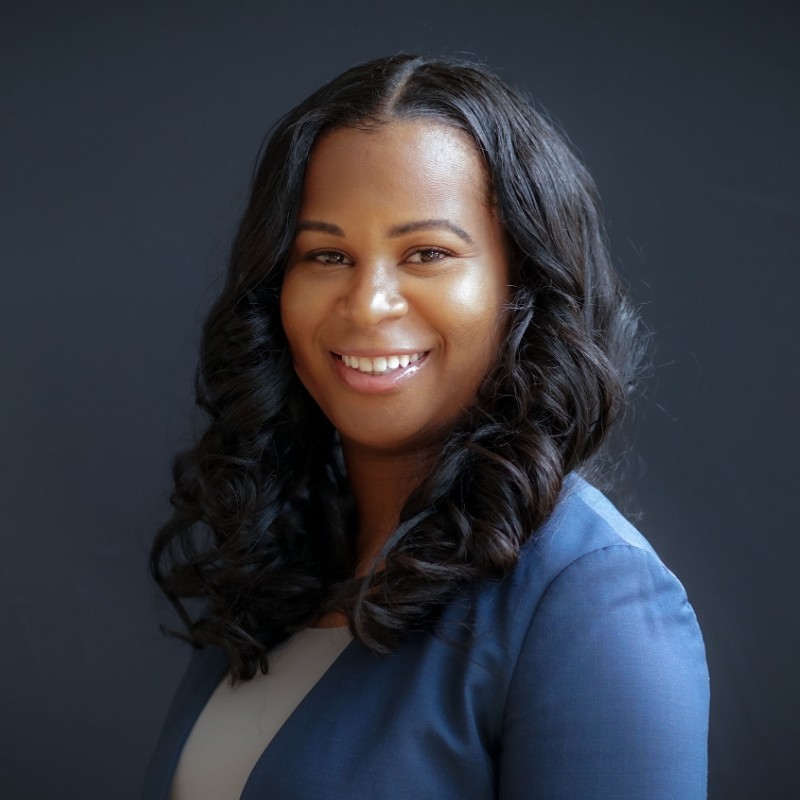
Shalanda Armstrong
Shalanda Armstrong is the Managing Partner at 100KM Ventures, a Washington DC-based firm investing pre-seed through Series A in the future of work and the future of health. The fund's name carries meaning: 100 kilometers is the distance from sea level to the Kármán line—the boundary of space—representing the firm's mission to push founders to the edge of what's possible.
Shalanda's conviction about the venture industry began in 2003, when she was a sophomore computer science major and saw the press release announcing Peter Thiel's $500,000 investment in Facebook. While her classmates wanted to start companies, she thought differently: "How do I become the person who gave him the money? That's what I want."
She spent the next two decades preparing. She rose through software engineering to technology strategy consulting, helped scale a professional services firm from 200 to over 1,000 employees and $250M in revenue, then sold it to Salesforce in 2020. Along the way, she angel invested in 30+ companies and became an LP in several VC funds. She intentionally waited for a market downturn to launch—understanding that historically the best vintages come from difficult fundraising environments.
"I'm here for the hard stuff that no one wants to talk about and it's not sexy, but it's required when it comes to scaling. When you're freaking out at two or three in the morning because you lost a big deal, I want to be the investor that you call."
Shalanda's operator background gives her a unique lens. She knows what it takes to scale from 100 to 500 employees, and she brings that experience directly to founders—not as someone who just writes checks and waits for markups, but as someone who can help navigate the unsexy operational challenges that determine success or failure.
Her broader vision: proving you can build a best-in-class firm in Washington DC while bridging the historical disconnect between government, policy, and innovation.
Shalanda's Hot Take: A lot of early-stage bridge rounds are bridges to nowhere. Founders can't articulate where the bridge is going to land them. It's a band-aid with no healing underneath.
Shalanda's Trend to Watch: Institutional LPs are finally getting comfortable with solo GPs. They're realizing that partnerships can blow up just as easily—life changes, marriages, sick parents. Venture is demanding, and now they understand that solo GPs may actually be less risky than they assumed.
Shalanda's Career Advice: It's not about timing—it's how much you can endure. I hear women waiting for the right time, but you just have to jump in. It's a hard business with ups and downs, but if you can endure, that's what makes you successful. And we need more women in all the seats—partners, principals, check writers—because that's the only way the capital allocation stats will change.
Nominate a woman to watch
This Fall edition showcases four remarkable women expanding what venture capital can be—from building world-class platform functions to championing underrepresented founders, bringing deep domain expertise to complex sectors, and advocating for sustainable growth models.
Their stories reinforce that the best investors bring diverse experiences, genuine founder empathy, and the courage to challenge industry orthodoxies.
If there is a woman you’d like to see us feature next, nominate her here.
.png)


